
Introducing Me
Updated: Nov 12, 2025
The face behind the name.
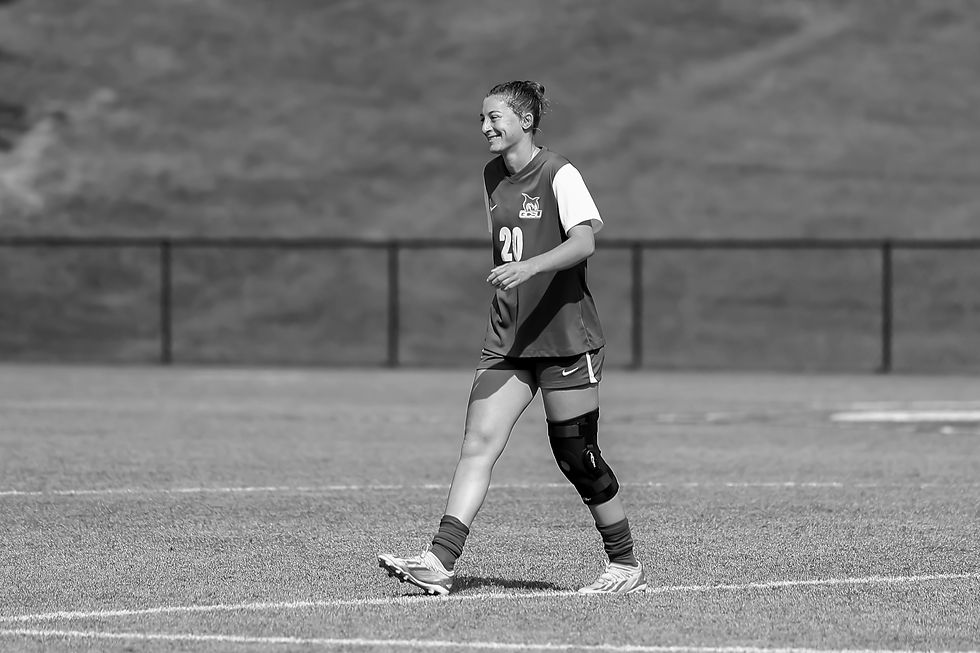
You may be wondering who the face behind this platform is? Great question—and welcome to my very first blog post, “Introducing Me," By the time you’re done reading, you might know more about me than you bargained for, so I’m putting a lot of trust in you here.
Let's start with the basics.
My name is Ellie Fuller. I’m a 21-year-old graduate student-athlete at Georgia College & State University. I earned my BBA in Management Information Systems in December 2024 and am now pursuing my Master’s in the same field. That covers the “student” part of student-athlete, but the “athlete” side has been a far less linear journey.
If you haven’t read my bio yet, here’s the short version (and if you have—thanks for sticking with me). In high school, I committed to play Division II soccer at the University of West Georgia. But for several reasons, my passion for the game began to fade. When I chose to attend GCSU, it was strictly for academics—but I quickly fell in love with the campus and the community.
After a rocky first year, I started working with the athletic department, helping out at various sporting events—including soccer. At first, the break from playing felt necessary. But within weeks, I realized something: I didn’t want to work the games... I wanted to be in them. A few conversations and one tryout later, my name was officially on the roster. I was finally chasing the dream I thought I’d left behind.
Now that you know a bit more about my path, let’s go deeper. You’ve probably already read why I created this platform, so I won’t get too emotional again—but I do want to share some personal experiences that shaped it. And what better way to do that than a slightly-too-honest, trauma-laced bullet point list? Let’s get into it.
After spending over a decade with the same club — from rec league all the way through U16 — I made the decision to pursue a more competitive path and chase my goal of playing in college. I told my team I’d be leaving at the end of the season, expecting support for the next step in my journey. Instead, I spent the next three months being ignored, excluded, and talked about behind my back by people I once considered my closest friends. At a time when I should have felt excited about my future, I felt isolated and betrayed. That experience showed me how quickly relationships in sport can shift — and how painful it can be when your support system disappears just when you need it most
My first season with the new club started off with so much promise. I had already committed to play in college, found lifelong friendships (shoutout to Bennett and Rachel), and was training under one of the most experienced coaches I’d ever worked with. But that momentum quickly shifted. When that coach left, he was replaced by someone who slowly unraveled the love I had for the game. What followed were two years of mistreatment — personal insults, emotional neglect, and jokes at the expense of our well-being. If you weren’t on the favorites list, you were invisible. As a 16-year-old, those experiences left a deep impact. They made me question my worth, my ability, and whether this sport I had devoted my life to still had a place in it for me.
Sharing the news with my family that I had decided not to pursue collegiate soccer was one of the hardest conversations I’ve ever had. The dream I had been chasing — the one my dad had cheered on for years — was suddenly slipping away by choice, not circumstance. I knew I was making the right decision for myself at the time, and even now, I stand by it. But the weight of feeling like I had let others down, particularly my biggest supporters, was something I carried with me long after. If I was choosing what was best for me, why did it feel so heavy? Why did it hurt so much?
A year and a half into college, I finally added “athlete” to my title. The spring of my sophomore year marked my first official season with the GCSU Women’s Soccer program. What I expected to be a long-awaited return to the sport I loved quickly turned into a humbling reality. My performance was far from where I hoped it would be — missed passes, poor touches, lack of fitness, and minimal playing time. I spent most scrimmages on the sideline, seeing just 10 minutes of action in a 90-minute match. I pushed myself harder during the off-season — training on off days, staying late after practice — but what lingered the most wasn’t physical fatigue. It was the quiet, constant self-criticism and frustration that followed every mistake. That period taught me how isolating and mentally exhausting the athlete experience can be — especially when you feel like you’re falling short.
In Fall 2023, I experienced my first in-season period as a member of the team. Over the course of an 18-game season, I logged 301 minutes across 12 games played, with 2 starts. My stat line: 2 goals, 3 assists, and 6 of 9 shots on target. After my dad and I compiled a dataset tracking key stats for all attacking players on the roster, we found that I ranked first in minutes per point (goal = 3, assist = 1), second in assists, and tied for first in shots-on-goal percentage. But the most striking number of all? I was dead last in minutes played. This was especially difficult to process after months of hearing our coach emphasize that an attacker’s role is to “produce output.” I had done that—more efficiently than most—yet I remained on the sidelines. For a long time, I tried to rationalize it: Maybe it’s just a transition year. Maybe next season will be different. But deep down, it chipped away at my confidence, my trust in the system, and my relationship with the sport I had poured so much into. Which brings me to my next point.
The next eight months leading into my senior (second) season were some of the most focused and demanding of my life. I committed fully—lifting, running, and training on the ball nearly every day—to put myself in the best possible position to contribute. My fitness reached new heights, my technical ability sharpened, and my strength noticeably improved. By August, I was confident and ready for a breakthrough season. And on paper, there was progress. I appeared in 93% of the matches I was available for—a clear improvement from the previous year. I want to be clear that I was, and still am, grateful for every minute I got, especially knowing there were talented players who spent the season on the bench. But even so, I couldn’t shake the feeling of being overlooked. Week after week, I watched teammates who lacked consistency, effort, respect, or even interest play twice as many minutes—despite what they brought (or didn’t bring) to the field/team. It was frustrating and confusing. I had done everything right—on and off the field—but still found myself on the margins.
As the latter half of the season unfolded, things were finally beginning to click. My performances improved, and my minutes increased. I added both a goal and an assist in a single game, and in the next match, I hit a career-high 46 minutes with three shots and several chances created. I remember that game vividly—not just because of how it ended, but because it was one of the best I’ve ever played. For the first time in a long time, I felt free out there. Confident. Wild in the best way. In the 68th minute, everything changed. I stepped to the ball. Pop. I was down screaming. Yup, you guessed it—I tore my ACL and meniscus. I’ll share the full story in a separate post. But for now, all you need to know is this: that moment, and everything it set in motion, is the heart of why I created this platform. Because what happens after the whistle blows is just as important—and often, just as painful—as what happens during it.
So, thank you for taking the time to get to know me and the journey that led to the creation of Beyond the Game. These experiences — the highs, the lows, the setbacks, and the moments of resilience — are what shaped not only my story but the purpose behind this platform.
Beyond the Game isn’t just about sport; it’s about everything that comes with it — the mental, emotional, and physical challenges that often go unspoken. It’s a space for student-athletes who, like me, have faced hardships both on and off the field, and who need a place to find support, resources, and community.
I’m honored to have you here as part of this conversation. Together, we can break the silence, challenge the stigma, and redefine what it means to be an athlete — beyond the game.
Stay tuned for more stories, insights, and resources as we continue this journey. And if any part of my story resonates with you, know that you’re not alone.
— Ellie Fuller


Comments